The Thing Behind the Thing: How One Event Changed My Life and How That’s Changed My Events
by Jensen Cummings
Read Time: 11 Minutes
I’m just a dumb cook.
That’s not false humility. It’s a perception I had to grapple with before I could see what I was actually here to do.
For years, I thought my job was to execute. To be the expert. To know more about food and beverage and event production than anyone else in the room, and to use that expertise to deliver flawless experiences.
I was good at it. I won Chef awards. I opened restaurants. Ran culinary events. Built conferences for the industry. Spoke all over the country. I knew how to build brands, design menus, manage logistics, hit timelines, blah blah.
And almost everything I produced felt like it could have been done by anyone else.
Not because it was bad. Because it wasn’t anything in particular.
The Grind
We were putting on restaurant trade show conferences, big productions, serious budgets, all the booths and breakout sessions and sponsor activations you’d expect.
And every single one felt exactly like every other one.
Eight hundred people wandering through convention halls like cow-eyed lemmings, filling tote bags with branded pens they’d never use, learning nothing, connecting with no one. Just being sold to.
I kept thinking the problem was execution. Better speakers. More relevant topics. Smarter layouts. I kept trying to optimize a format that was fundamentally broken.
Because I didn’t understand what I was actually building or who it was for.
I thought events were about information transfer. About content and access and networking opportunities. I thought if the substance was good enough, if the food was excellent, if the speakers were credible, if the logistics were flawless, the experience would follow.
It doesn’t work that way.
But I didn’t know that yet. I just kept grinding. Churning. Trying harder. Checking more boxes.
Not knowing I was pointed in the wrong direction entirely.
The American Liver Foundation
They came to us in 2014.
Annual fundraising gala. Two hundred people. Rubber chicken dinner in a hotel ballroom. The same event they’d been running for years, with declining attendance and a donor base that was quietly aging out of existence.
They knew it was dying. They just didn’t know what else to do.
When I asked them who the event was for, they said “donors.”
When I asked them to describe one, give me a name, tell me about their world, tell me what keeps them up at night, the room went quiet.
They didn’t know.
They’d been throwing the same event for so long that they’d stopped seeing actual people. It had become a ritual. A thing they did because they’d always done it.
I pushed. Who’s missing who should be here? What would make someone leave feeling like they’d experienced something they couldn’t get anywhere else?
Silence. Then slowly, some truth aka “the thing behind the thing, the real thing.”
They wanted younger people. Energy. They wanted their top sponsor (Toyota) to see imagination instead of the same corporate donor table they’d occupied for eight years. They wanted guests to feel connected to the mission, not guilted into writing checks.
But they’d heard consultants talk before. They weren’t sold on upending the format just because some dumb cook said they should.
So I leaned into that superpower. I got comfortable being the dumbest person in the room. And then….I cooked for them.
I made a playful representation of ‘stone soup’. Yep, from the fairy tale. Brought it to their board meeting and served it while I explained what we could become. (I’ll send you the recipe if you want)
Stone soup isn’t just a silly story about contribution, it’s about what happens when a community comes together and each person brings what they have, who they are. The result is something none of them could have made alone.
That could be their event. Not a transactional donor dinner. A gathering where everyone contributed something real.
It was a risk. They knew it.
They took it anyway.
What We Built
We didn’t just change the menu. We blew up the entire model.
The foundation had always left catering to the hotel, standard banquet hall fare, rubbery and forgettable. We brought in twenty chefs from Denver’s best restaurants and gave each of them a station. Twenty pods of ten guests. Each chef cooking live in front of their group.
But here’s what mattered: we brought in kids from the community to work as sous chefs alongside the professional chefs.
Not culinary students necessarily. Kids from the neighborhoods the foundation served. Some of them had family members affected by liver disease. Some of them had never been inside a fine dining restaurant, let alone worked in one.
We made them part of the story.
They weren’t there to chop onions in the back. They were there as collaborators. Working shoulder-to-shoulder with chefs they’d only seen on TV or read about in magazines. Learning. Being seen. Mattering.
And their parents came. Parents who’d never attended a foundation event before, who had no connection to the donor base, who suddenly felt like this thing was for them in a way nothing ever had been.
They didn’t just attend. They donated. They sponsored tables. They brought friends.
Toyota wasn’t stuck at a sponsor table watching strangers eat. They were integrated into the narrative. These kids, the future car buyers they were trying to reach, were right there, part of the experience, connected to something bigger than a transaction.
The chefs brought their imagination. They weren’t phoning in a banquet plate. They were cooking stone soup, their version, their interpretation, their contribution to something communal and alive.
The whole thing worked.
Not just financially, though we brought in exponentially more money than the rubber chicken dinner ever had. It worked because everyone in that room felt like they were part of something that mattered. The foundation staff. The donors. The sponsors. The chefs. The kids. The parents.
We’d served them all by getting clear on who they actually were and what they needed that they weren’t getting anywhere else.

The Moment I Saw It
I didn’t understand what had happened right away.
I was standing in that room watching a fourteen-year-old kid plate food next to a (now) James Beard-nominated chef, watching their mother tear up at her table, watching Toyota execs actually engage instead of endure, watching the foundation director realize they didn’t have to choose between mission and money….and something clicked.
I’d connected dots I didn’t even know existed.
The goals of Toyota and the American Liver Foundation weren’t in conflict. The needs of the donor base and the underserved community weren’t mutually exclusive. The desire for a meaningful experience and the need to raise serious money weren’t opposing forces.
They’d all been treated as separate problems requiring separate solutions.
But they weren’t separate. They were part of the same system. And when you got clear on who you were actually serving, not in theory, but in specific, named, real detail, the solutions started to emerge.
Not because I was smart. Because I finally stopped trying more and started caring more.
I didn’t have a name for it yet. I didn’t have a process. I just knew something had shifted.
The Transformation Nobody Tells You About
Here’s what I had to let go of: the way things have always been done.
My expert status. My need to be the one who knew. My attachment to grinding harder and checking more boxes and proving I could execute flawlessly.
None of that mattered if I was pointed in the wrong direction.
And I’d been pointed in the wrong direction for years, optimizing systems that didn’t serve anyone in particular, building events that could have belonged to anyone.
The shift in me was dramatic. The shift in the work has been slow. Baby steps I guess. Most weren’t ready, still aren’t.
I changed one element of an event. One activation. I helped a client rethink their product positioning or a restaurant reconsider their business model or how they treated employees. Small adjustments. Course corrections.
My mother is of the generation that watched the moon landing live. She told me something that stuck: You don’t make it to the moon by pointing a rocket and hoping. You get there by making ten thousand course corrections of 0.000000001 degrees.
Most of us, when we realize we’ve gotten something wrong, we make a 180-degree turn. Blow it up. Start over. Swing the other direction.
That’s not where transformation lives.
Transformation lives in Kaizen. In the patient, relentless, progress towards clarity.
I started to see my own thing behind the thing.
I wasn’t here to be the expert cook or the event producer or the brand strategist. I was here to connect systems and frameworks and processes to the stories of the people living them. To help others gain understanding. To be the translator-interpreter who helps someone determine how their mission, their vision, their expertise, their language, fits into a larger story they can’t see yet because they’re too close to it.
That’s what I had done at the American Liver Foundation without realizing it. I had made clear the needs of kids and parents and chefs and sponsors and donors and a foundation on the brink, into one coherent story where everyone’s contribution mattered.
And once I saw it, I couldn’t unsee it.
Get Clear On
I started applying it everywhere.
Not as a formal process at first. Just as a way of asking better questions.
Who is this for? Not the demographic. The actual person. Why do they get out of bed in the morning? What are they afraid of? What do they need that they’re not getting anywhere else?
What’s the thing behind the thing? Strip the spin. What’s the real reason this exists?
Does this decision reflect who we actually are, or who we wish to be?
Can we execute this well with the resources we actually have, or are we setting ourselves up to fail?
I’ve worked across so many sectors and barriers, with CPG brands, tech companies, regenerative agriculture nonprofits, corporations and mom n’ pops alike. We started with ideas that looked perfect on paper and connected with no one.
Every time, the problem was the same: they were grinding without purpose.
Moving fast. Working hard. Not knowing if they were aimed at anything that mattered.
So I started helping them get clear, first.
Not with a 180-degree pivot. With those ten thousand course corrections.
It became a process. A framework. Something I could name and repeat and teach….Get Clear On. Get Clear on who you serve. Get Clear On what’s actually true. Get Clear On whether this reflects who you are. Get Clear On how well you can do this.
Then build. Then course-correct. Then build again.
The Clouds and the Dirt
I still fail more than I succeed.
Because we’re stuck in our ways. Because clarity is uncomfortable. Because most organizations would rather keep doing what they’ve always done and hope it works than admit they don’t truly know who they’re serving or why.
But when it works, when someone finally stops spinning and gets clear, the transformation isn’t actually incremental. It’s exponential.
That’s what happened at the American Liver Foundation.
The trick is to hold space for the big ideas and do the work of ‘0.000000001 degrees’. It’s about having the vision to see the clouds and being willing to work in the dirt. About being the bridge between those gaps. The connective tissue. The medium who helps people realize that the thing they’re building and the people they’re trying to serve aren’t at dispirit, they just haven’t been introduced properly yet.
I’m not the expert anymore.
I’m just the dumb cook who finally figured out that the food was never the point.
The point is whether the person eating it feels seen and connected.
And you can’t make someone feel seen if you don’t know who they are.
That’s the thing behind the thing.
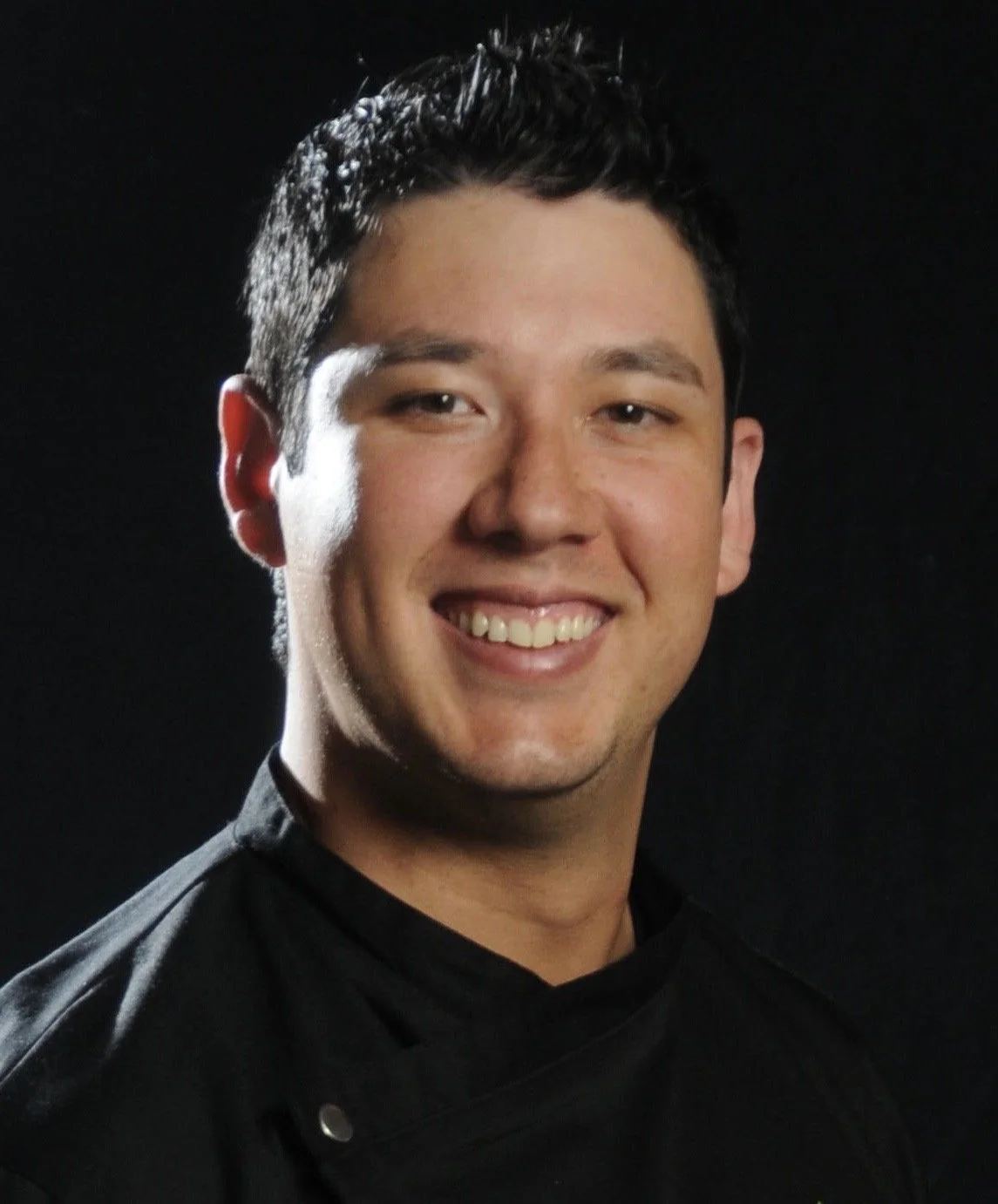
Jensen Cummings is a fifth-generation chef turned event producer, storyteller, strategist, podcaster, sportscaster, and youth coach.
He brings more than 120 years of restaurant family legacy into his professional journey.
Jensen has owned a premier boutique event company, strategy-consulting firm and media agency since 2013.
He’s hosted 500+ podcast episodes about events, business, food, agriculture, sports, sustainability, and more, all with one mission: to amplify the worth and work of those who ‘feed’ their communities.