The “C” Word Your Live Event Better Get Right in the Age of AI
by Jensen Cummings
Read Time: 8 Minutes
Everyone is chasing AI right now. And I get it. I use it. Hell, Claude AI helped me with the composition and structure of this article. It’s a great tool.
The capability is real. The credibility of saying you’re “strategically deploying it at scale…blah blah” is real. The continuity it can create across creative, campaigns, content, and communications is real.
But there is another “C” word that we really need to be talking about, and it’s the one that’s going to define which brands thrive in the next decade: Connection.
Here’s what I have struggled with and come to understand from spending twenty-plus years in hospitality, producing over 500 episodes of this podcast, and building Denver Culinary Events into a premier event management agency and platform that has raised more than $6 million for charitable causes: what those in the hospitality industry have somehow intuitively always known. That the thing you’re selling is never really ‘the thing’. The meal isn’t the meal. The event isn’t the event. What you’re offering, what people are actually paying for, driving across town for, clearing their calendar for, is the feeling of being cared for, cared about, and connected to something and someone beyond themselves.
We are caught in a “the easy way or the hard way” scene in the business world right now. Which path are you going to choose?
As We Go High Tech, We Have to Go High Touch
There’s a pattern I’ve watched play out in hospitality over and over, and I’m watching it happen in real time across every industry right now: the more automated and efficient the experience becomes, the more desperate people get for something real.
Think about the last time a brand genuinely surprised you. Not with a personalized email triggered by your browsing history. I mean actually surprised you. Made you feel seen. Made you stop in your tracks and recognize that something special just happened. And once you’ve seen what’s possible, you want more. You need more. The status quo will no longer do.
That moment didn’t come from a data center. It came from flesh and blood, who understood that their job wasn’t to deliver a product or even a service. Their job was to evoke a feeling, a bonafide human emotion and an enduring memory.
This always makes me think of what Maya Angelou wrote (paraphrasing): people will forget what you said and what you did, but they will never forget how you made them feel. That’s not a soft sentiment. That is a hard business truth. In an era where AI can replicate the ‘what you said’ and the ‘what you did’ at infinite scale and near-zero cost, the ‘how you made them feel’ isn’t just a differentiator anymore. It’s the whole game. It’s what gets me out of bed in the morning.
This isn’t not a knock on the tools we are utilizing. It’s the recognition that the more we use AI to optimize for efficiency in our daily lives, the more we foster a genuine human hunger for that aforementioned feeling of connection. Live events aren’t some kind of nostalgic holdout for the good ol’ days. They’re the counter-weight keeping us balanced while AI does what AI does.
The Sandbox Theory
When companies come to me, they usually think they are looking for a better event. They want the latest activations, hippest production, the glitz and the glam and all the shiny things. I like those. These serve a great purpose. These too are not ‘the thing’. What they desperately need is a better story, and an event that lives inside that story rather than replacing it. A story that makes the audience the hero. A story that includes and inspires, that motivates and moves.
Here’s how I think about my job: I build sandboxes. Why? Because they're fun and heaping with metaphor, and I’m trying to make a damn point here.
Every grain of sand, every dimension, every material in your sandbox exists for the benefit of the business. The goals are clear. The strategy is sharp. The container is intentional. Once we are inside your beautifully custom branded and swagged out sandbox, I’m not the one who decides what gets created. Your audience is. You are. You might dig a moat. Sam is rolling around making sand angels. The developers are in the corner expertly designing and constructing a sand castle. Everyone has their own individual experience and a shared experience with the people alongside them, simultaneously. That dual layer of personal and communal is what fosters bonds and memories. That’s what creates belief and values.
That’s also precisely what AI is not going to do. That’s on us.
AI is extraordinarily useful for aggregation, iteration, organization, optimization. I use it daily for exactly that. I’ll keep using it. Claude is a very helpful robot. Creativity and connection are innately human, though. They require presence. They require the ability to read a room, and I don’t mean through that next-gen sentiment analysis software. I mean actually reading a room. Feeling the energy shift. Knowing when to push and when to pull back. Knowing when the agenda needs to get thrown out because something real just happened and you need to let it breathe.
No cleverly crafted series of prompts can produce that. I’ve tried. The machine just gave me more ✅formatting. IYKYK.

Please Stop Treating Your Event Like a Blip in Time and Space
Here’s where most organizations, even smart ones with marketing teams exponentially smarter than me, are still getting wrong: they treat their events as standalone moments floating in nothingness.
You work for six months honing the perfect event with all its bells and whistles and best practices, it happens, hell it goes really well, the exit-surveys give 4 stars on average, and cite the customizable-immersive-experiential sprockets as “bussin”. People go home. The momentum dissipates. Three weeks later, you’re already in the next planning cycle wondering why engagement is down and why the buzz from that incredible two days has faded.
The answer is simple: you treated the event like the destination, the pot of gold at the end of the rainbow, instead of a plot point in a well-written screenplay. And your audience reciprocated. They came. They saw. They forgot. We didn’t include them in a great story that stands the test of time.
It turns out that every great story has a beginning, a middle, and an end. Who knew? That basic structure is somehow the first thing that gets abandoned when planners start planning the plan. The event isn’t the whole story. It’s the dramatic center of a story when the hero slays the dragon. That epic climax falls flat if we don’t feel connected to their journey and who are then desperate to hear what happens next. The event is where connection gets ignited. The work surrounding it is how that connection becomes culture. Yes, another “C” word.
Here are some ways I think about the beginning, middle, and end of an event story. Not as a checklist, but as an emotional architecture.
The Beginning - Building Anticipation:
The goal before anyone walks through the door is belonging. You want your audience to arrive already invested, already curious, already feeling like an insider rather than a registrant. That means building context, not just awareness. Lead-up editorial content that establishes the stakes and the story so people hit the ground running and have a reason to care. Speaker and participant introductions written like an intro between friends rather than stuffy LinkedIn bios. Short-form content that teases and sparks intrigue, not “here’s what to expect” rather “here’s why this matters to you.” When you do this well, the event doesn’t start when people walk in. It started months ago, and they are bursting at the seems to walk in those doors.
The Middle - Slaying The Dragon:
This is where the sandbox theory lives in practice. The moment your audience came for doesn’t come from the agenda. It’s not because there is a workshop at 12:15pm in Studio C. It’s because Ron is going to be guiding us on how to tell better stories on social media. It Also comes from what the agenda made room for. That means building intentional space into the experience, shared meals, informal gatherings, open pockets in the schedule that look like inefficiency and function like most-digging magic moments. It means giving participants agency over their own experience rather than delivering content at them. Remember, they are the Hero of our story. It means your team being aware and empowered and sensitive enough to read the room and throw the agenda out when something real is happening. The live captures, the recordings, the documented moments all matter, but only because they’re capturing the truth.
The End - Just The Beginning:
The event ends. The story doesn’t. The question is whether you’ve given people a reason and a place to keep living inside of it. That means distributed content, audio, video, written reflection, that extends the experience to people who weren’t there and reinforces it for people who were. It means community spaces where the conversation has somewhere to go after the last session wraps. Most importantly it means follow-up that reflects back what actually happened rather than what was planned to happen. When people see themselves in the story you’re telling afterward, they don’t feel like attendees who got a recap email. They feel like characters who are still in the middle of something life-changing and can’t wait to find out what happens next.
This is what I’ve watched work at Denver Culinary Events and Best Served Creative. The success metrics are meaningful, sure, however what I’m most proud of is the connective tissue we’ve grown, the community of professionals, supporters, sponsors, and leaders who show up not just because they believe in the cause, but because they believe in each other.
That doesn’t happen at a single event. It happened across dozens of them, through stories told consistently, through relationships tended intentionally, through a shared narrative that made every person feel like they were part of something bigger than themselves. Every industry, every company, every event has this opportunity, in my mind, this responsibility.
Every Business Is Now in the Hospitality Business
Here is some food for thought. Here is my Chef background showing some bias. But perhaps here is the frame that changes everything, and I mean this for companies of every size and every segment of the marketplace.
The competitive advantage of the next decade isn’t going to be who has the best AI stack. Plenty of organizations will have excellent AI. The advantage is going to belong to whoever can make people ‘feel’ something in a world that is increasingly optimized to feel like nothing.
That means every business is now in the hospitality business. Full stop. The ability to deliver the feeling of being genuinely welcomed, genuinely seen, genuinely cared for will be the currency of the future. A live experience, whether it’s a product release, a community dinner, a fundraiser, an annual gathering of your most loyal customers, or an internal team summit, is still the most powerful tool we have for generating that feeling at scale.
AI can help you plan it. But if your event feels like it was produced by my buddy Claude, being flawlessly seamless, optimized, frictionless, robotic, and totally forgettable then you have lost the plot and you’ll need to read this article again.
Turns out the “C” word that’s going to matter most isn’t capability, credibility, continuity, or any of the other clever buzzwords out there.
It’s connection. And I, for one, am eager to feel connected. You?
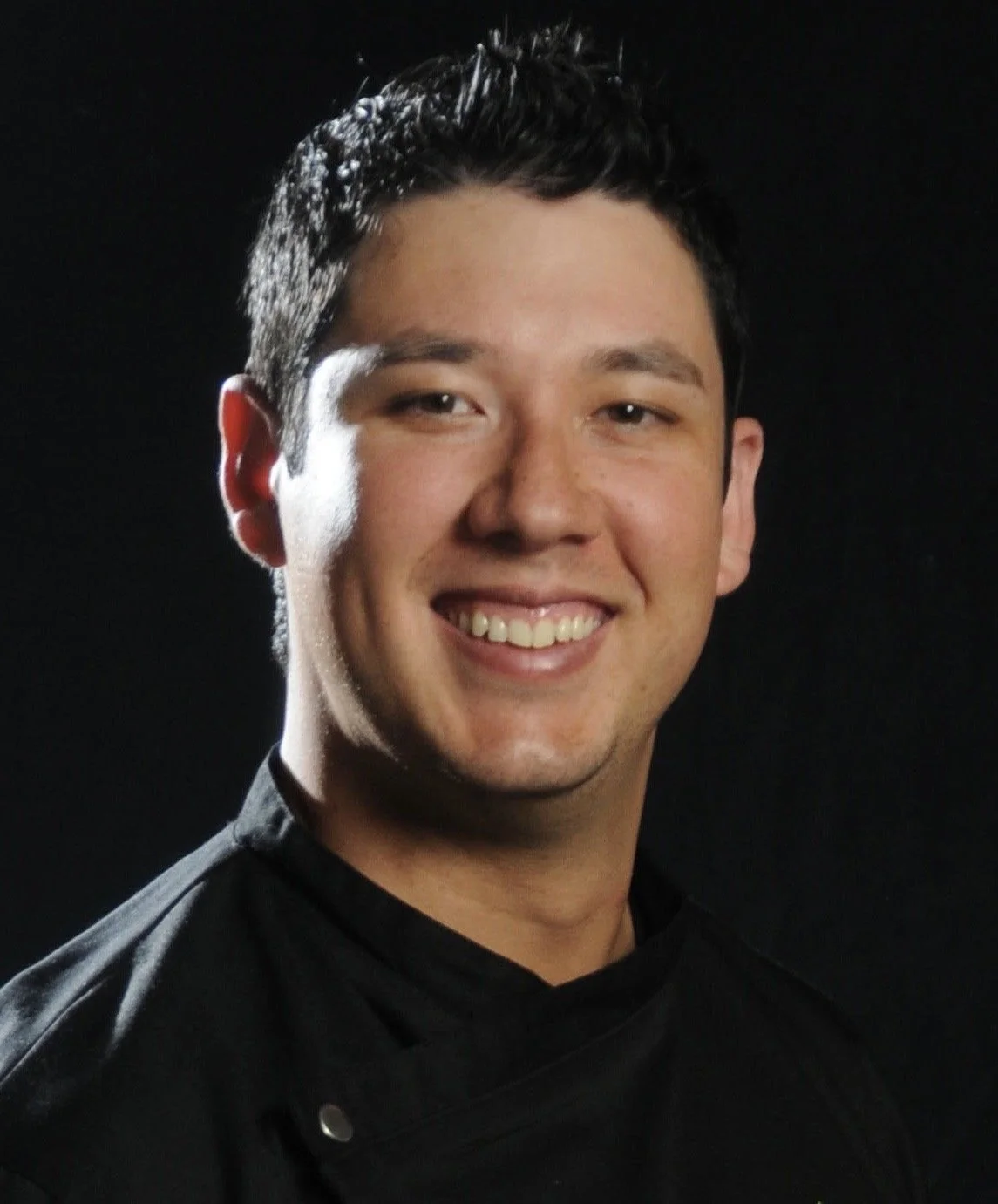
Jensen Cummings is a fifth-generation chef turned event producer, storyteller, strategist, podcaster, sportscaster, and youth coach.
He brings more than 120 years of restaurant family legacy into his professional journey.
Jensen has owned a premier boutique event company, strategy-consulting firm and media agency since 2013.
He’s hosted 500+ podcast episodes about events, business, food, agriculture, sports, sustainability, and more, all with one mission: to amplify the worth and work of those who ‘feed’ their communities.